
Cat Kookaburra kangaroo Monkey Owl Panda3 panther Polar Bear Rabbit Tiger Giraffe Meerkat Dolphin
Skip to content ↓
Spiritus Ad Surgere - Let Our Spirits Soar High

Pre-School - Hedgehog Class


Welcome to Hedgehog Class

Class teacher: Mrs Bolt

Teaching assistants: Chloe and Katy


 Preschool Learning Overview – Term 4

Exploring Colours, Weather & Festivals

This term the children will be exploring the themes of colour, weather and celebrations, with a particular focus on the festivals of Holi. Their learning will be enriched through a set of beautifully chosen key texts including Elmer, How to Catch a Rainbow, Festival of Colours, A Rainy Day – Percy’s Park, One Springy Day, and How Do You Make a Rainbow? These stories will help anchor learning across all seven areas of the Early Years curriculum.

Communication and Language

Children will have many opportunities to develop their communication skills this term. They will listen to others in small groups, especially when the conversation relates to topics of interest such as those explored in Elmer. As their confidence grows, they will begin to follow instructions that include more than one part and use increasingly complex sentences to express their thoughts and feelings, particularly during discussions about Holi. They will also continue developing their understanding of prepositions—terms such as under, on top, and behind—which they will practise through play and stories like How to Catch a Rainbow.

Physical Development

Physical development will be supported through activities that encourage balance, coordination and control. Children will be practising walking down slopes or steps while carrying objects, inspired by Elmer, and developing spatial awareness as they run and negotiate space safely during Holi themed movement play. They will experiment with balancing on one foot or holding a squat, and they will explore throwing and catching larger objects using both hands, supported by themes in How to Catch a Rainbow. Alongside this, they will be encouraged to notice and communicate their physical needs, such as when they feel hungry, tired or ready to rest.

Personal, Social and Emotional Development

This term places strong emphasis on cooperation, empathy and emotional understanding. Children will learn to consider the needs of others and practise skills such as turn taking and sharing, which are explored through celebrations like Holi. They will also develop strategies for negotiation and compromise and learn how to seek adult help when resolving disagreements, as reflected in themes from Elmer. As their awareness grows, they will begin to recognise how their choices and actions can affect others, and they will start to notice and respond to the feelings of their peers. Regular routines will help them feel a sense of belonging and participation within the group.

Literacy

Through engaging stories, children will continue to develop early reading and writing skills. They will join in with repeated phrases and anticipate key events in familiar books such as Elmer. They will discuss stories, talk about characters and even predict how a story might end. We talk a lot about alternative endings  and what the children what like to see happen. There will be lots early Independent reading skills encouraged with opportunities to access both printed and digital books, especially through Rhino Readers and Twinkl Phonics games. Children will begin to assign meaning to the marks and symbols they create and imitate writing by making continuous lines from left to right. They will also show increasing interest in illustrations, environmental print and the written word, reinforced through colourful Holi themed texts.

 Mathematics

Mathematical thinking will develop through hand on exploration. Children will compare small groups of objects and identify when amounts are the same, an idea introduced through stories linked to Holi. They will practise subitising small numbers and begin using number names and language within play. Through playful investigation, children will discover that numbers can be made by combining smaller numbers, as illustrated in How to Catch a Rainbow. They will also continue using positional language in their play, supported by ideas from Elmer, and will begin choosing objects based on their shape.

Understanding the World

This area of learning will be shaped by curiosity and discovery. Children will talk about what makes them unique and explore similarities and differences between themselves and their families, a key idea in Elmer. They will investigate natural phenomena and ask questions about how things work—such as how rainbows are formed, why magnets stick or why the grass becomes wet after rain—drawing on themes from How to Catch a Rainbow. The term also provides opportunities to explore family customs, daily routines and celebrations including Holi and Easter. Children will learn about different occupations and roles in the world around them, such as how Percy helps animals in the park.

 Expressive Arts and Design

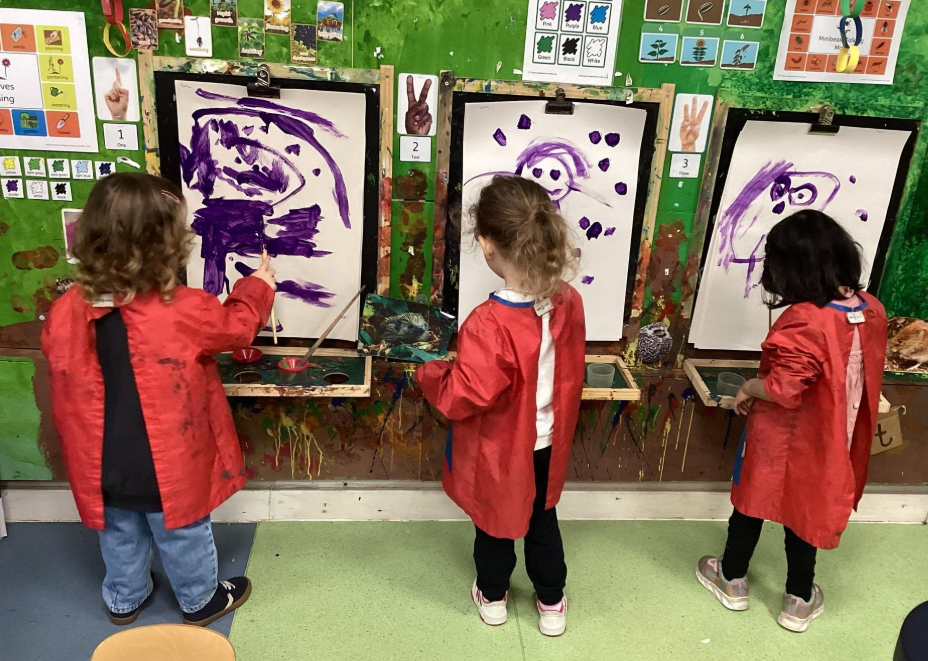
Creativity will flourish as children explore a variety of artistic and musical experiences. They will investigate how sounds can be created using everyday objects like saucepans and spoons and will experiment with construction materials to build, balance and create spaces, an idea supported by How to Catch a Rainbow. Colour exploration will be an exciting focus as children use paints, inks, chalks, liquids and oils to investigate how colours can be changed and mixed, inspired by Elmer. Movement and dance will also play a role as children respond creatively to music and stories, especially those linked to festivals such as Holi, expressing their own ideas, emotions and celebrations.


‘Widgit’ in Pre-school

We use ‘widgit’ signs and symbols to help us learn the new words and vocabulary in our stories. These are published on the website and we strongly recommend that you look at these are home with your child. If your child speaks two or more languages it is really important for their development to speak about these words in all their languages and not just in English.

Makaton

 This is to help us express and communicate our wants and needs. We use Makaton how to say yes please and no thank-you, say what fruits they like to eat and make choices independently using their Makaton skills.


What a busy term we have ahead of us!

Mrs Bolt and the Pre-school team

Pre-school room

We have a wonderful, light and engaging environment for the children to play, learn and explore in. We have lots of exciting new resources for the children to share and a wonderful interactive whiteboard to enhance learning opportunities. We have created lovely, calm areas to explore mark -making and our senses as well as purposeful zones to further develop specific skills. Our continuous provision - the space where they use and explore independently, provides the children with endless opportunities to develop their skills in each of the seven areas of the EYFS.

Outdoor Learning

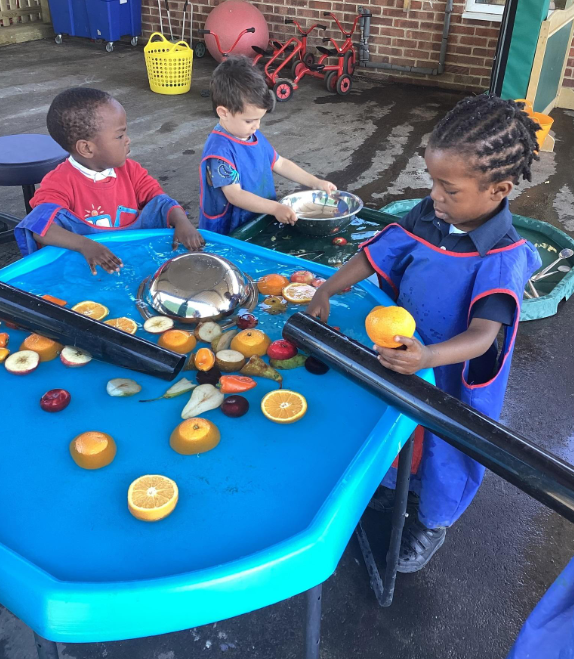
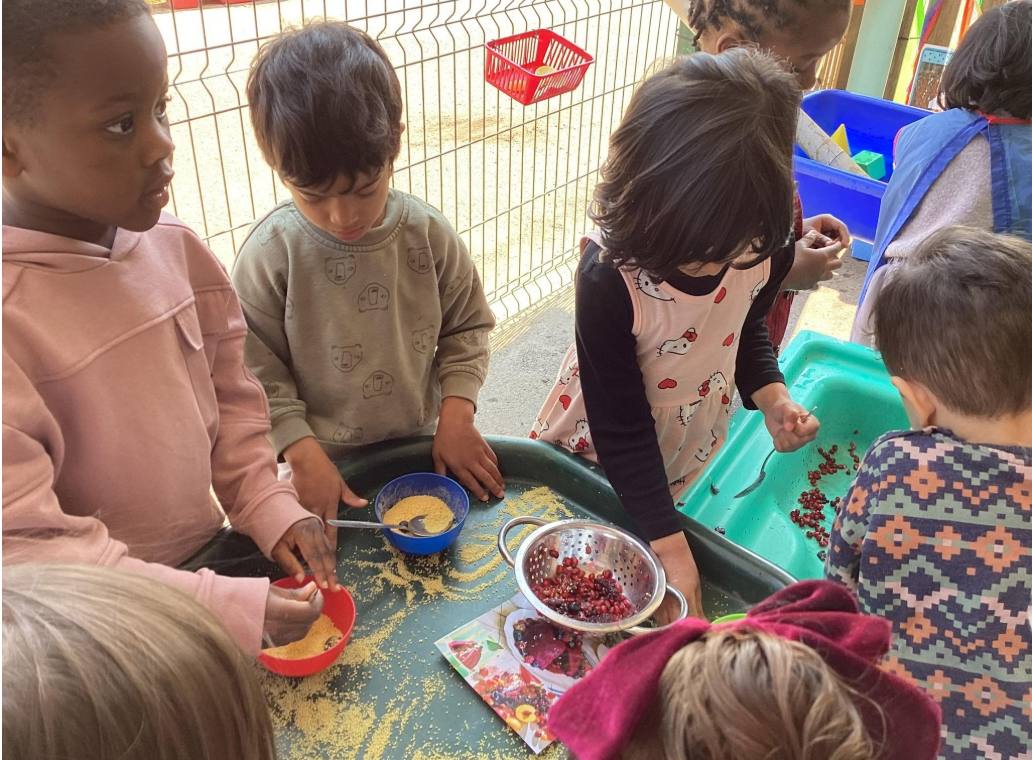
Throughout the day, the children will have time in the outdoor areas. We have free flow sessions on to the patio area and learn to explore in the 'big garden'. There is so much to see and do outside, from bikes, trikes, balls and hoops to water, soil and exploring all aspects of growing, weeding, planting and harvesting. The children will be hands-on with various seeds, plants, soil and herbs. They will get messy - please consider this when dressing your child for the day.  The children will have constant opportunities to choose resources independently, to explore collaborative play and decide how they want to develop their ideas and play in the outside area. We will respond to these interests and use natural resources, risk-taking equipment and will be out in all weathers, so please provide a coat, wellington boots and appropriate foot wear each day.

Children in pre-school learn through:

Three characteristics of effective teaching and learning.

  • Playing and exploring- children investigate and experience things, and 'have a go'
  • Active Learning- children concentrate and keep on trying if they encounter difficulties, and enjoy achievements
  • Creating and thinking critically- children have and develop their own ideas, make links between ideas, and develop strategies for doing things.